
Reflective insulation versus polystyrene - which should you choose?
Published on 22.08.2026 · Isoflect Insulation technical team
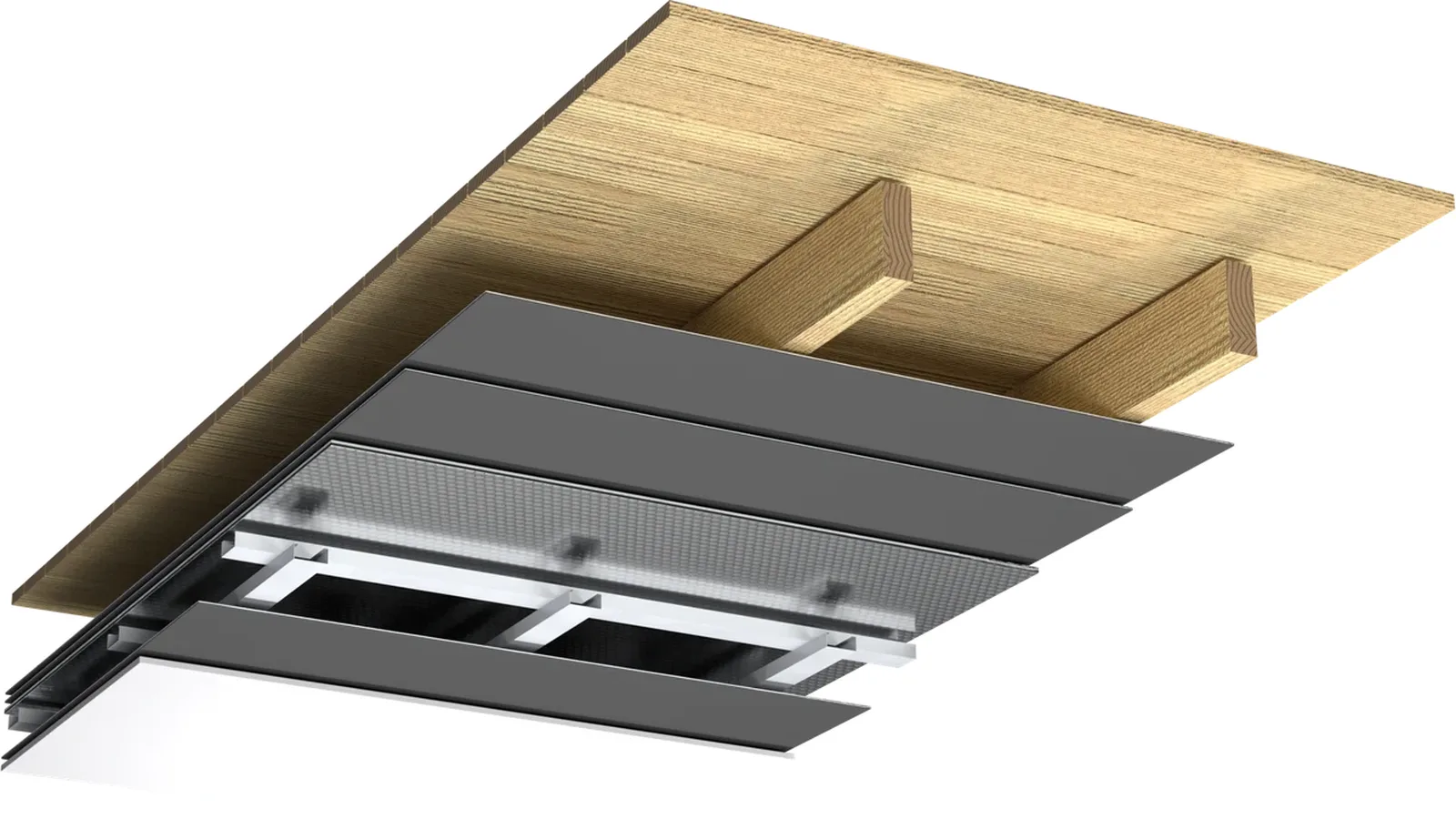
A habitable attic in which heat accumulates in summer and condensation forms on the membrane in winter does not necessarily need more material, but rather a correctly installed system. In the comparison of reflective insulation versus polystyrene, the choice is not limited to the price per square metre or to the thickness of the roll or board. What matters is the area of application, the available space, the moisture risk, the type of structure and the way in which the materials work together.
Polystyrene is a bulk insulation, with predictable thermal performance when selected in the appropriate thickness. Reflective insulation is a multifunctional technical membrane, capable of limiting radiant heat transfer, contributing to airtightness and, depending on the product and installation, controlling vapour migration. They are not identical materials and, in many well-executed projects, they do not compete directly: they complement each other.
Reflective insulation versus polystyrene: the real difference
Expanded (EPS) and extruded (XPS) polystyrene reduce heat losses through conduction. The thicker the layer and the lower the lambda of the material, the greater the thermal resistance of the assembly. It is a familiar solution for façades, plinths, floor slabs, floors and certain wall configurations.
A reflective membrane acts differently. Metallised surfaces can reflect thermal radiation, but they require an air space in order to function effectively in this role. Installed compressed between two solid surfaces, without an air cavity, it will not provide the same contribution to thermal comfort. For this reason, a reflective membrane should not be assessed merely by its glossy appearance or by its thickness of a few millimetres, but by the entire installation system.
Another difference is functionality. Polystyrene is not normally a continuous vapour barrier, nor does it by itself resolve the sealing of joints. A suitable reflective membrane, correctly taped and sealed at overlaps, perimeters and service penetrations, can limit air infiltration and the uncontrolled transport of vapour. This function is essential particularly in habitable attics and lightweight constructions.
Do not compare thickness alone
A 10 cm polystyrene board and a reflective membrane a few millimetres thick cannot simply be compared as though they had the same function. Polystyrene provides bulk thermal resistance. The membrane works as part of an assembly that may include air cavities, mineral or ecological wool, interior lining and vapour control layers.
If the objective is to achieve an R-value required by the design or by the local code, calculate the performance of the entire structure. Declared values must be verified against the actual application, the orientation of the surface, the air spaces and the installation conditions. Claims such as “replaces 10 cm of insulation” without details about the system should be treated with caution.
When polystyrene is the efficient choice
Polystyrene remains highly suitable when there is sufficient room for a thick layer and an application that requires a rigid, stable insulation that is easy to calculate. Exterior façades, floors beneath screed and areas subject to mechanical loads are clear examples, with the correct choice between EPS and XPS depending on pressure, water and construction details.
On the exterior, EPS is frequently used in façade systems, where thickness is the principal means of reducing heat transfer. In areas exposed to moisture or pressure, XPS may be more suitable owing to its reduced water absorption and compressive strength. Nevertheless, even here the thermal bridges around windows, foundations, balcony slabs and joints must be correctly resolved.
Polystyrene also has limitations. It does not effectively attenuate airborne noise in all configurations, it can complicate the routing of services and it does not replace an airtightness strategy. In a timber roof, for example, fitting rigid boards between rafters may leave joints that are difficult to control, and condensation resulting from a discontinuous vapour barrier may affect the structure.
When reflective insulation provides the decisive advantage
Reflective insulation becomes particularly valuable when space is limited and when radiant heat, air infiltration and vapour must be managed simultaneously. In a habitable attic, a membrane installed continuously on the warm side of the insulation can form a well-defined control layer, with sealed joints and correct details at the ridge, eaves, roof windows and services.
In climates with hot summers and roofs directly exposed to the sun, the capacity to reflect radiation can improve interior comfort if the necessary air cavity is present. The benefit is also relevant for buildings with metal sheeting or other roof coverings that heat up rapidly. The membrane does not eliminate the need for a correctly sized insulating layer, but it can reduce the thermal load on the system.
A further advantage is rapid installation over large surfaces. The rolls continuously cover the rafters or lightweight metal structures, and the joints can be sealed with compatible tapes. The result is more predictable than a build-up with many small pieces, especially where every perforation and every joint represents a potential point of air leakage or vapour migration.
The correct choice for each area
Habitable attic and loft
For a permanently used habitable attic, the high-performance solution is often a combined one. A layer of thermal insulation wool between and, where the design permits, beneath the rafters provides the necessary insulating mass. The reflective membrane, installed towards the interior in accordance with the technical data sheet, can complement the system through airtightness and vapour control. It is an intelligent configuration for thermal comfort, reduced condensation risk and acoustic attenuation.
For a non-walkable unheated attic, the priorities change. Bulk insulation on the ceiling slab is usually the most effective intervention, as it directly separates the heated volume from the cold space. A reflective membrane may have a specific role depending on the build-up of the slab and the need for airtightness, but it should not automatically be chosen as a substitute for the required insulating thickness.
Walls and façades
On façades, polystyrene is generally the more direct choice for high thermal resistance and exterior continuity. Reflective insulation has a more appropriate role in interior walls, lightweight structures, ventilated façades or areas where air and vapour control must be carefully integrated. The order of the layers is not determined by preference, but by vapour diffusion, ventilation and climate.
Floors, pipes and services
Beneath screed or in load-bearing areas, polystyrene with adequate compressive strength is usually the basic solution. For underfloor heating, a system is required that limits downward heat loss and provides stable support for the screed. Reflective layers may contribute in certain build-ups, but they must not replace the necessary thermal insulating and mechanical support.
For pipes and HVAC installations, the comparison changes completely. Here, the temperature of the medium, the pipe diameter, access for installation and the risk of condensation are important. A dedicated technical pipe insulation, supplemented where appropriate by a reflective or protective layer, offers more reliable performance than adapting a material intended for walls.
Three mistakes that cost more than the material
The first mistake is choosing on the basis of thickness or a single commercial indicator. The second is ignoring joints, sealing tapes and perforations made by cables, spotlights or profiles. The third is trapping moisture in an assembly that has not been calculated for drying towards the interior or towards the exterior.
Condensation does not occur because a material is “good” or “bad”. It occurs when moist air reaches a cold zone and the structure cannot correctly control vapour, air and temperature. For this reason, high-performance insulation must be regarded as a system: insulating material, membranes, air cavities, ventilation, fixing and sealing.
For renovation projects, measure the area, identify the existing structure and determine where the continuous air control layer lies. If you have a habitable attic, a lightweight wall or a floor with special requirements, a system configurator and Isoflect technical consultancy can transform an uncertain choice into a tailored solution. The right material is not the glossiest or the thickest, but the one that works correctly with the rest of the construction and maintains the comfort of the home season after season.
Not sure which Isoflect product suits you? See the complete map — which Isoflect product is installed in each area of the house or open the package configurator to find out exactly what you need and in what quantity.