
Home · Applications · Between the rafters, beneath the roof boarding
Between the rafters, beneath the roof boarding
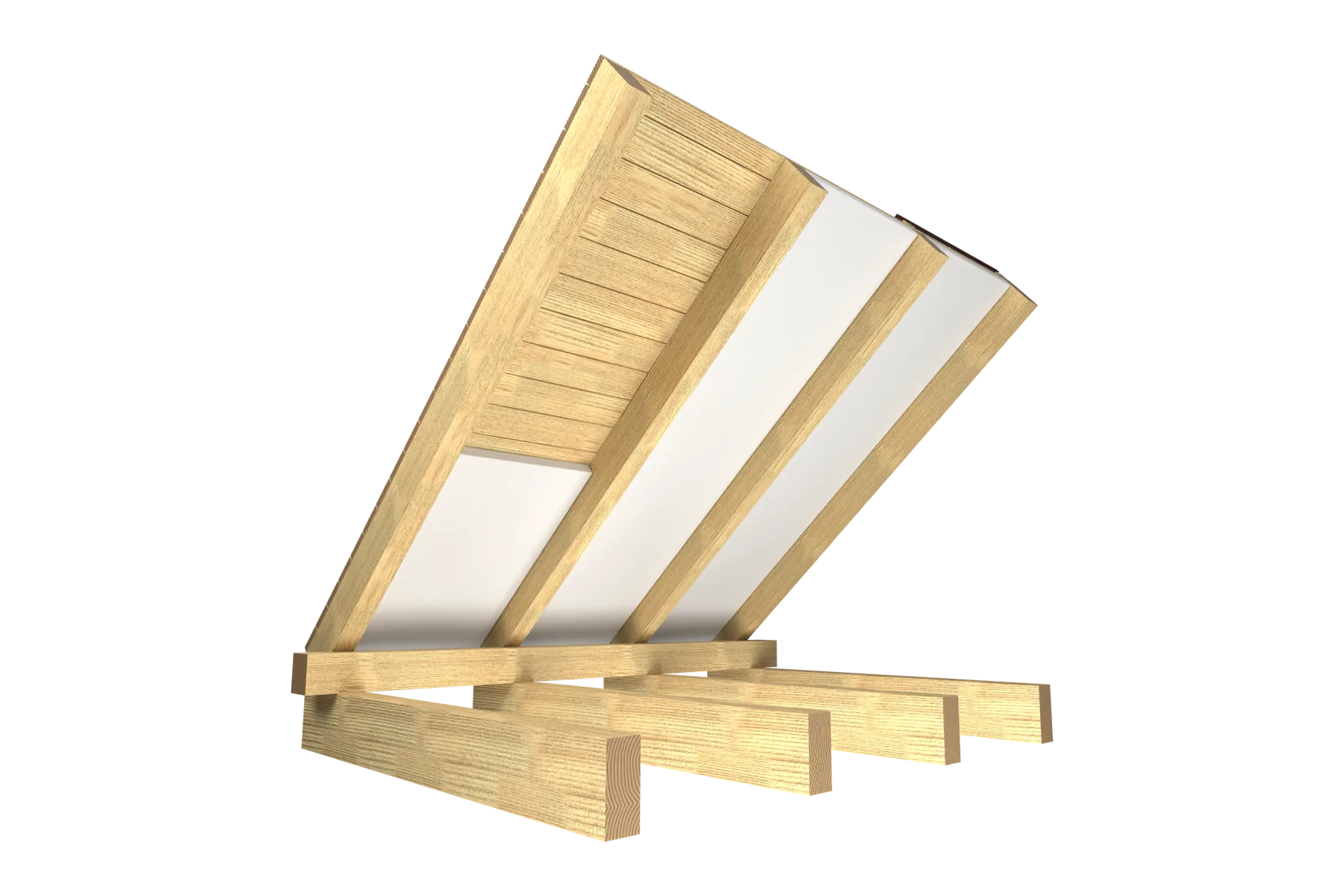
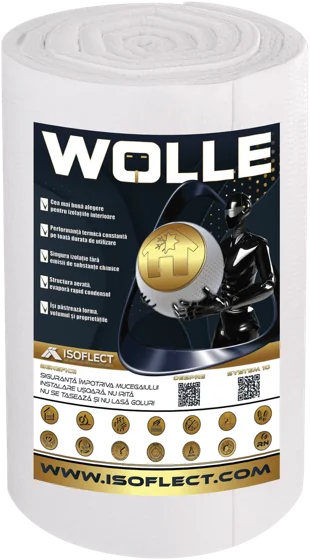
A layer of Wolle P800 in rolls, against the roof boarding, where the dew point forms. The insulation below remains protected.
Technical content: Bogdan Ivănescu, graduate engineer, PhD candidate at the Technical University of Cluj-Napoca · updated on 16.10.2026
Three zones, each with its own role
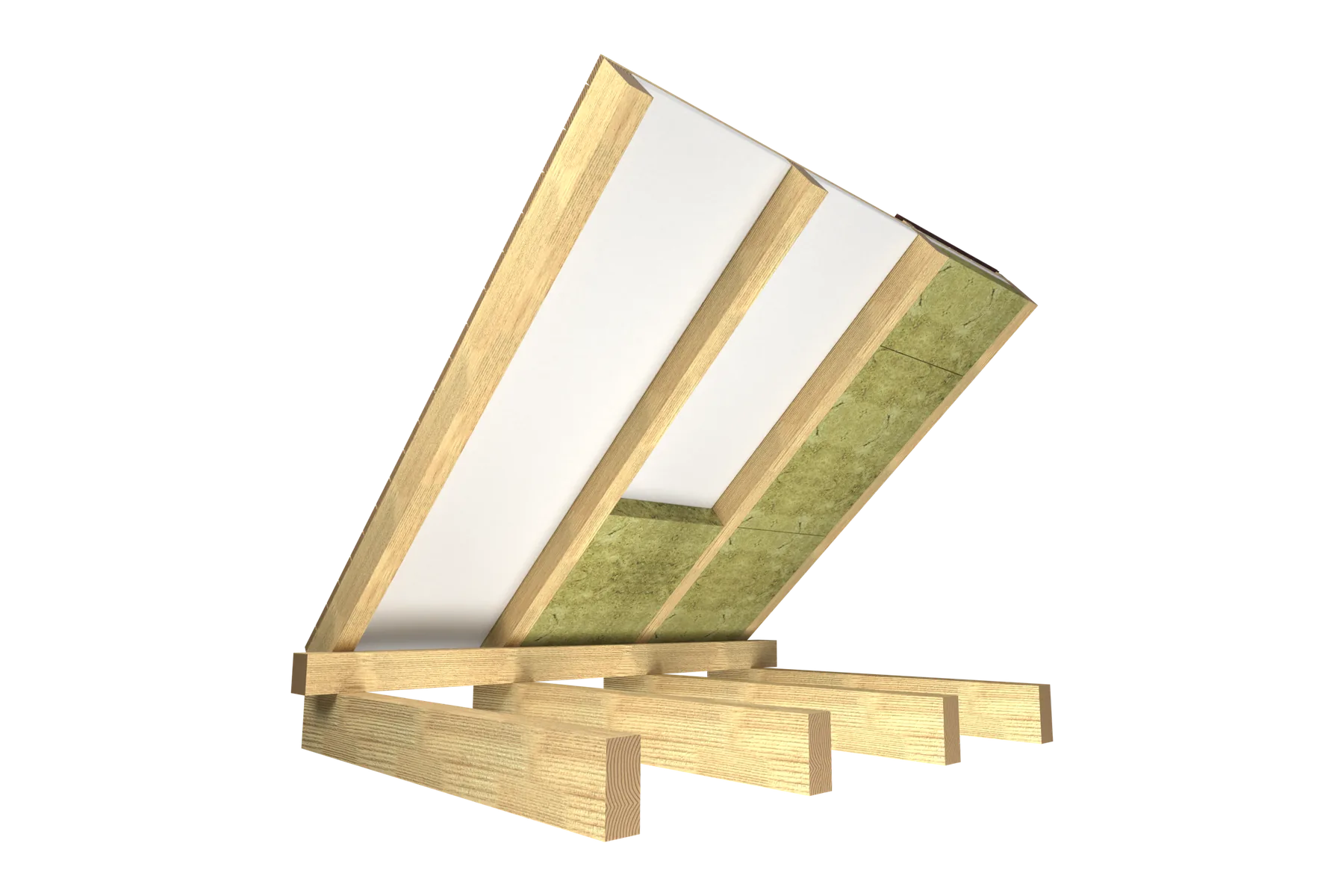
Between the rafters, directly beneath the roof boarding, a single layer of Wolle P800 is installed. That is where the dew point forms: the layer protects the insulation below – stone wool, glass wool or any other insulation, with the exception of polyurethane foam – from repeated wetting and drying cycles, extending its service life. Isoflect Roof Pro is installed over the roof boarding.
Self-supporting
Wolle P800 stays in place against the roof boarding on its own, without adhesive and without fixings.
Protects the insulation
The layer keeps repeated wetting and drying cycles away from the insulation below and extends its service life.
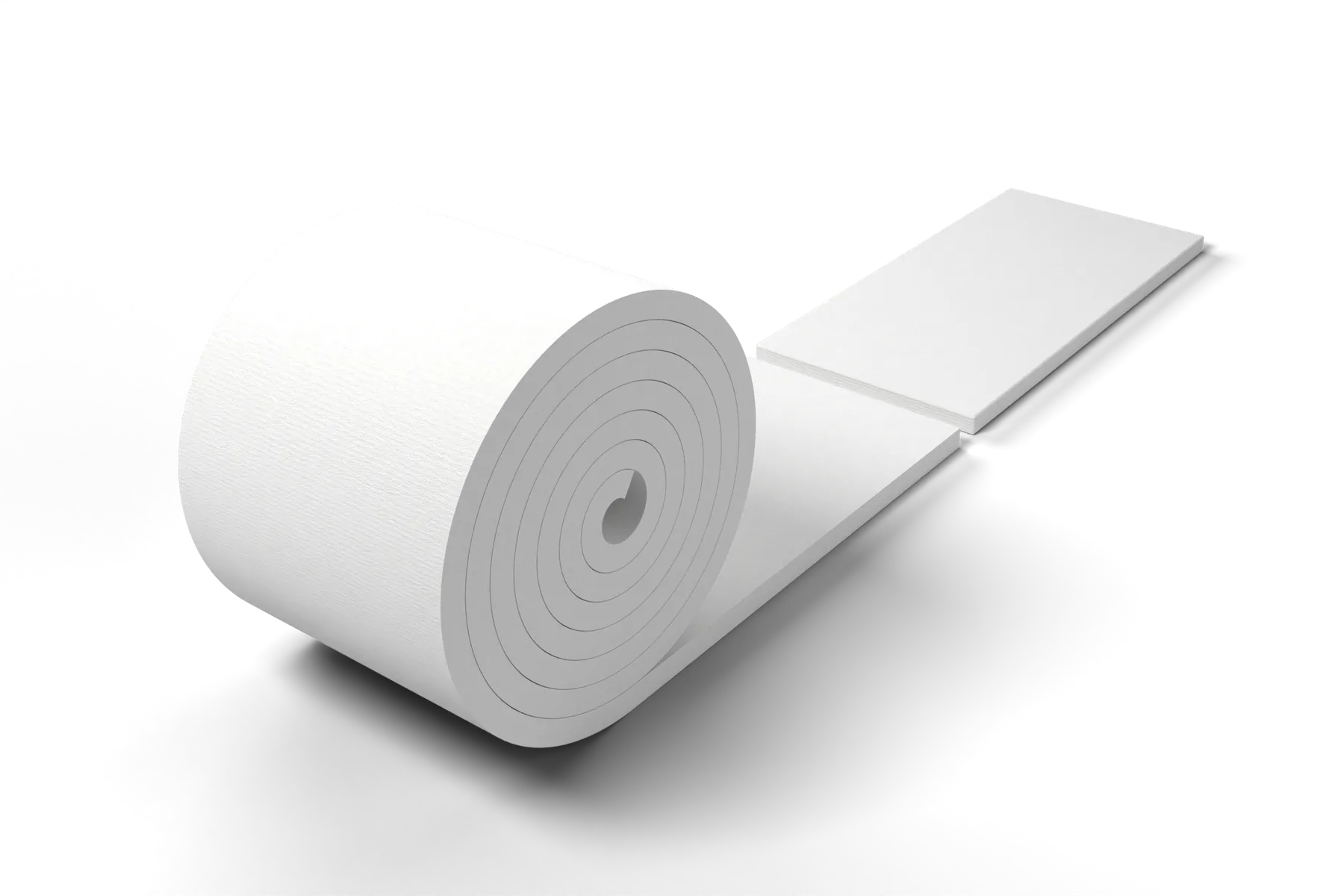
The 0.61 m roll
Wolle P800, 5 cm thick, in rolls 10 m long: 0.61 m wide (6.1 m²) and 1.2 m wide (12 m²).
Hybrid insulation system between rafters
If you require insulation that remains as durable as possible over time, protect it with a first layer of Wolle P800 placed against the roof boarding. Wolle is a synthetic thermal insulation fibre with a thermal conductivity of 0.038 W/mK, immune to repeated wetting and drying cycles: the dew point remains within this resistant layer, not within the main insulation, which reacts and deteriorates with every wetting and drying.
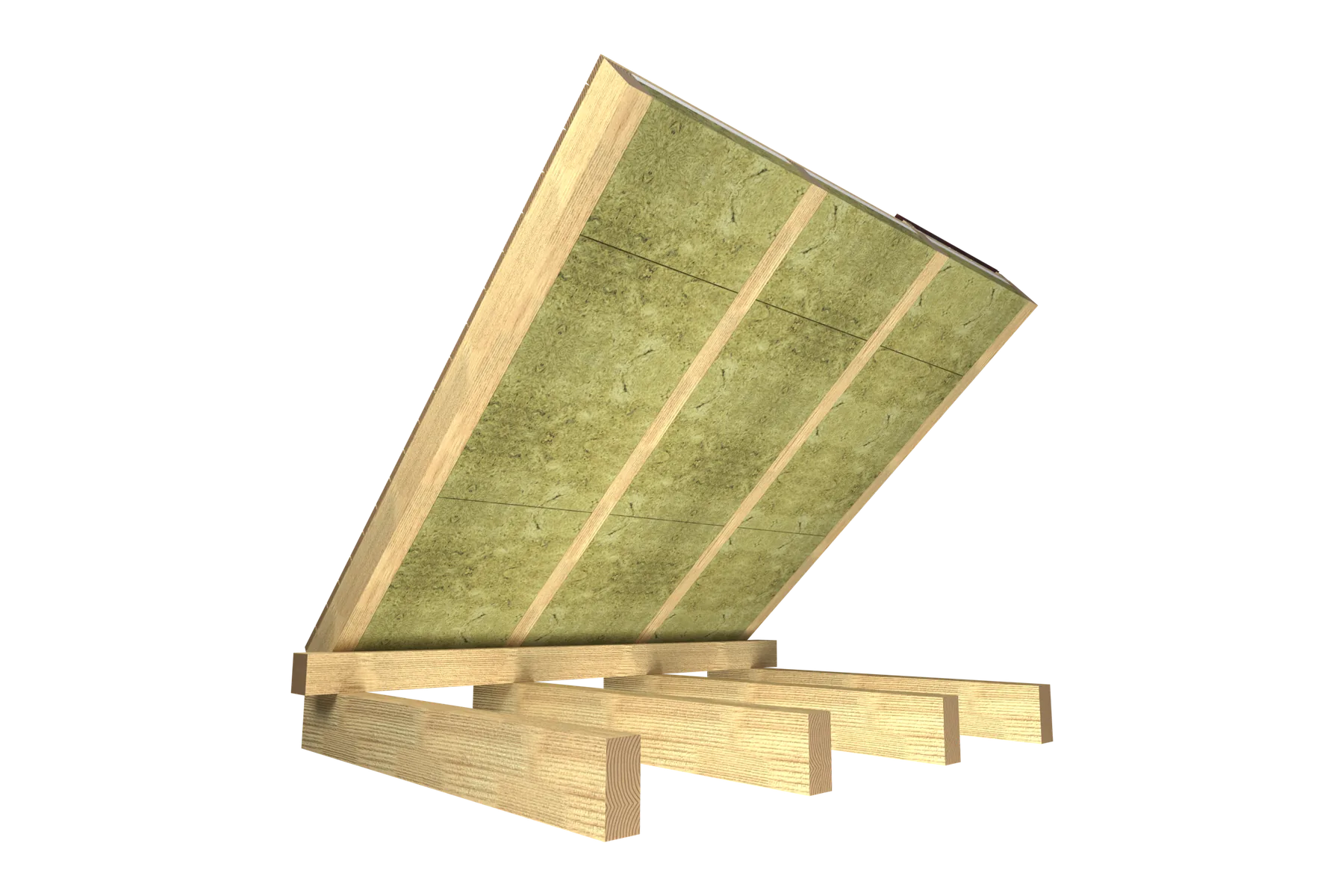
Stone wool, glass wool or any other insulation you may wish to install, with the exception of polyurethane foam, thus receives a supporting layer: a layer of protection against moisture and against repeated wetting and drying cycles. In insulation materials containing organic substances, binders and other additives, these cycles are extremely harmful and accelerate the degradation of the product. The Wolle P800 layer keeps moisture away from them and extends their service life.
The installation does not alter the rest of the work: the Wolle P800 strip is pressed in between the rafters, it is self-supporting, and the main insulation is installed after it, as usual.
Installation steps
Click on the central image to enlarge it.
Products for this application

Frequently asked questions
Does it need to be bonded with adhesive?
No. Wolle P800 is self-supporting: it stays in place against the roof boarding on its own, without adhesive and without fixings.
Why directly beneath the roof boarding?
That is where the dew point forms. The Wolle P800 layer protects the insulation below from repeated wetting and drying cycles, extending its service life.
Which insulation should I install below?
Stone wool, glass wool or any other insulation, with the exception of polyurethane foam. It is installed after the Wolle P800 layer, beneath it.
What goes over the roof boarding?
The Isoflect Roof Pro membrane is installed over the roof boarding.
Which roll should I choose?
The 0.61 m roll suits the usual gaps between rafters. The roll is cut to the required length.